Friday, May 29, 2009

Gone Tomorrow

Gone Tomorrow


Amazon.com Review
Book Description
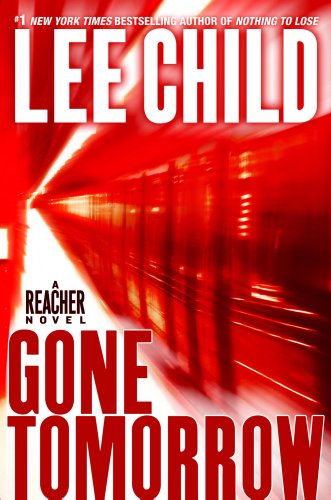
New York City. Two in the morning. A subway car heading uptown. Jack Reacher, plus five other passengers. Four are okay. The fifth isn’t.

In the next few tense seconds Reacher will make a choice--and trigger an electrifying chain of events in this gritty, gripping masterwork of suspense by #1 New York Times bestseller Lee Child.

Susan Mark was the fifth passenger. She had a lonely heart, an estranged son, and a big secret. Reacher, working with a woman cop and a host of shadowy feds, wants to know just how big a hole Susan Mark was in, how many lives had already been twisted before hers, and what danger is looming around him now.

Because a race has begun through the streets of Manhattan in a maze crowded with violent, skilled soldiers on all sides of a shadow war. Susan Mark’s plain little life was critical to dozens of others in Washington, California, Afghanistan . . . from a former Delta Force operator now running for the U.S. Senate, to a beautiful young woman with a fantastic story to tell–and to a host of others who have just one thing in common: They’re all lying to Reacher. A little. A lot. Or maybe just enough to get him killed.

In a novel that slams through one hairpin surprise after another, Lee Child unleashes a thriller that spans three decades and gnaws at the heart of America . . . and for Jack Reacher, a man who trusts no one and likes it that way, it’s a mystery with only one answer–the kind that comes when you finally get face-to-face and look your worst enemy in the eye.

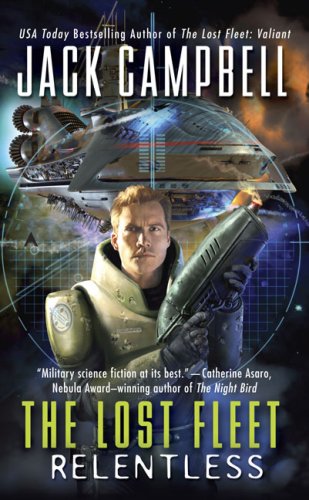
Relentless

Wicked Prey

Product Description
After successfully freeing Alliance POWs, “Black Jack” Geary discovers that the Syndics plan to ambush the fleet with their powerful reserve flotilla in an attempt to annihilate it once and for all. And as Geary has the fleet jump from one star system to the next, hoping to avoid the inevitable confrontation, saboteurs contribute to the chaos.

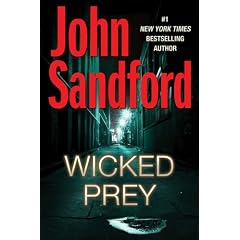
Wicked Prey

Wicked Prey

Editorial Reviews

Product Description

Danger stalks Lucas Davenport at work and all too close to home, in the superlative new thriller by the #1 New York Times–bestselling author.

For twenty years, John Sandford’s novels have been beloved for their “ingenious plots, vivid characters, crisp dialogue and endless surprises” (The Washington Post), and nowhere are those more in evidence than in the sudden twists and shocks of Wicked Prey.

The Republicans are coming to St. Paul for their convention. Throwing a big party is supposed to be fun, but crashing the party are a few hard cases the police would rather stayed away. Chief among them is a crew of professional stickup men who’ve spotted several lucrative opportunities, ranging from political moneymen with briefcases full of cash to that armored-car warehouse with the weakness in its security system. All that’s headache enough for Lucas Davenport—but what’s about to hit him is even worse.

A while back, a stray bullet put a pimp and petty thief named Randy Whitcomb in a wheelchair, and, ever since, the man has been nursing his grudge into a full head of psychotic steam. He blames Davenport for the bullet, but it’s no fun just shooting him. That wouldn’t be painful enough. Not when Davenport has a pretty fourteen-year-old adopted daughter that Whitcomb can target instead. . . .

And then there’s the young man with the .50 caliber sniper rifle and the right- wing-crazy background, roaming through a city filled with the most powerful politicians on earth. . . . Rich with his brilliant trademark suspense and some of the best characters in suspense fiction, Wicked Prey is further proof that “Sandford is one of the most consistently entertaining crime writers working today” (Booklist).

The White Tiger

The White Tiger

Editorial Reviews

From Publishers Weekly
Starred Review. First-time author Adiga has created a memorable tale of one taxi driver's hellish experience in modern India. Told with close attention to detail, whether it be the vivid portrait of India he paints or the transformation of Balram Halwai into a bloodthirsty murderer, Adiga writes like a seasoned professional. John Lee delivers an absolutely stunning performance, reading with a realistic and unforced East Indian dialect. He brings the story to life, reading with passion and respect for Adiga's prose. Lee currently sits at the top of the professional narrator's ladder; an actor so gifted both in his delivery and expansive palette of vocal abilities that he makes it sound easy. A Free Press hardcover (Reviews, Jan. 14). (May)

From The New Yorker
In this darkly comic début novel set in India, Balram, a chauffeur, murders his employer, justifying his crime as the act of a "social entrepreneur." In a series of letters to the Premier of China, in anticipation of the leader’s upcoming visit to Balram’s homeland, the chauffeur recounts his transformation from an honest, hardworking boy growing up in "the Darkness"—those areas of rural India where education and electricity are equally scarce, and where villagers banter about local elections "like eunuchs discussing the Kama Sutra"—to a determined killer. He places the blame for his rage squarely on the avarice of the Indian élite, among whom bribes are commonplace, and who perpetuate a system in which many are sacrificed to the whims of a few. Adiga’s message isn’t subtle or novel, but Balram’s appealingly sardonic voice and acute observations of the social order are both winning and unsettling.


From Bookmarks Magazine
At the end of the novel, Balram predicts that "brown and yellow men [will be] at the top of the pyramid, and we'll rule the world." Certainly, The White Tiger is a parable of the "new India," a rapidly growing global powerhouse of middle-class call centers juxtaposed against crushing class conflict and corruption. In contrast with other Indian authors, Adiga does not sentimentalize such conflict; instead, like Richard Wright's Native Son, to which the novel was compared, he shows how savvy manipulators can rise above it. Most critics thought that Adiga brilliantly told this story with wit and pathos. A few, however, thought that he lectured in parts, caricatured extreme wealth and poverty, and missed an opportunity to say something meaningful about Balram's desperation instead of mocking upper-class life. Either way, Adiga is an author to watch.


Review
[Audio Review] Debut author Aravind Adiga offers this revealing and truthful look at class struggle in modern-day India as seen through the eyes of chauffeur Balram Halwai. Halwai escapes a brutal existence in rural India only to end up murdering his rich employer in Delhi. The novel is told, in part, as a correspondence between Halwai and the premier of China, for whom the driver believes he holds valuable insights. Narrator John Lee reads with an accurate East Indian accent that will astound listeners searching for his normally stern British tone. Lee captures Halwai and his imperfect world perfectly, relating Adiga's views with a raw honesty. Lee puts his own twist on the work but never disowns Adiga's story rather, he welcomes it with open arms. Lee is the quintessential narrator. AudioFile Earphones Award winner, July 2008. --AudioFile

[Starred Review Audio Edition] First-time author Adiga has created a memorable tale of one taxi driver's hellish experience in modern India. Told with close attention to detail, whether it be the vivid portrait of India he paints or the transformation of Balram Halwai into a bloodthirsty murderer, Adiga writes like a seasoned professional. John Lee delivers an absolutely stunning performance, reading with a realistic and unforced East Indian dialect. He brings the story to life, reading with passion and respect for Adiga's prose. Lee currently sits at the top of the professional narrator's ladder; an actor so gifted both in his delivery and expansive palette of vocal abilities that he makes it sound easy. A Free Press hardcover (Reviews, Jan. 14). (May) --Publisher's Weekly --This text refers to the Audio CD edition.


Review
"Compelling, angry, and darkly humorous, The White Tiger is an unexpected journey into a new India. Aravind Adiga is a talent to watch." -- Mohsin Hamid, author of The Reluctant Fundamentalist

"An exhilarating, side-splitting account of India today, as well as an eloquent howl at her many injustices. Adiga enters the literary scene resplendent in battle dress and ready to conquer. Let us bow to him." -- Gary Shteyngart, author of Absurdistan and The Russian Debutante's Handbook

"The perfect antidote to lyrical India." - Publishers Weekly

"This fast-moving novel, set in India, is being sold as a corrective to the glib, dreamy exoticism Western readers often get...If these are the hands that built India, their grandkids really are going to kick America's ass...BUY IT." - New York Magazine

"Darkly comic...Balram's appealingly sardonic voice and acute observations of the social order are both winning and unsettling."- The New Yorker

"Aravind Adiga's The White Tiger is one of the most powerful books I've read in decades. No hyperbole. This debut novel from an Indian journalist living in Mumbai hit me like a kick to the head -- the same effect Richard Wright's Native Son and Ralph Ellison's Invisible Man had. - USA Today

"Extraordinary and brilliant... At first, this novel seems like a straightforward pulled-up-by-your-bootstraps tale, albeit given a dazzling twist by the narrator's sharp and satirical eye for the realities of life for India's poor... But as the narrative draws the reader further in, and darkens, it becomes clear that Adiga is playing a bigger game... Adiga is a real writer - that is to say, someone who forges an original voice and vision. There is the voice of Halwai - witty, pithy, ultimately psychopathic... Remarkable... I will not spoil the effect of this remarkable novel by giving away ... what form his act of blood-stained entrepreneurship takes. Suffice to say that I was reminded of a book that is totally different in tone and style, Richard Wright's Native Son, a tale of the murderous career of a black kid from the Chicago ghetto that awakened 1940s America to the reality of the racial divide. Whether The White Tiger will do the equivalent for today's India - we shall see." - Adam Lively, The Sunday Times (London)

"Fierce and funny...A satire as sharp as it gets." - Michael Upchurch, The Seattle Times

"There is a new Muse stalking global narrative: brown, angry, hilarious, half-educated, rustic-urban, iconoclastic, paan-spitting, word-smithing--and in the case of Aravind Adiga she hails from a town called Laxmangarh. This is the authentic voice of the Third World, like you've never heard it before. Adiga is a global Gorky, a modern Kipling who grew up, and grew up mad. The future of the novel lies here." - John Burdett, author of Bangkok 8

"Adiga's training as a journalist lends the immediacy of breaking news to his writing, but it is his richly detailed storytelling that will captivate his audience...The White Tiger echoes masterpieces of resistance and oppression (both The Jungle and Native Son come to mind) [and] contains passages of startling beauty...A book that carefully balances fable and pure observation." - Lee Thomas, San Francisco Chronicle

Product Description
Introducing a major literary talent, The White Tiger offers a story of coruscating wit, blistering suspense, and questionable morality, told by the most volatile, captivating, and utterly inimitable narrator that this millennium has yet seen.

Balram Halwai is a complicated man. Servant. Philosopher. Entrepreneur. Murderer. Over the course of seven nights, by the scattered light of a preposterous chandelier, Balram tells us the terrible and transfixing story of how he came to be a success in life -- having nothing but his own wits to help him along.

Born in the dark heart of India, Balram gets a break when he is hired as a driver for his village's wealthiest man, two house Pomeranians (Puddles and Cuddles), and the rich man's (very unlucky) son. From behind the wheel of their Honda City car, Balram's new world is a revelation. While his peers flip through the pages of Murder Weekly ("Love -- Rape -- Revenge!"), barter for girls, drink liquor (Thunderbolt), and perpetuate the Great Rooster Coop of Indian society, Balram watches his employers bribe foreign ministers for tax breaks, barter for girls, drink liquor (single-malt whiskey), and play their own role in the Rooster Coop. Balram learns how to siphon gas, deal with corrupt mechanics, and refill and resell Johnnie Walker Black Label bottles (all but one). He also finds a way out of the Coop that no one else inside it can perceive.

Balram's eyes penetrate India as few outsiders can: the cockroaches and the call centers; the prostitutes and the worshippers; the ancient and Internet cultures; the water buffalo and, trapped in so many kinds of cages that escape is (almost) impossible, the white tiger. And with a charisma as undeniable as it is unexpected, Balram teaches us that religion doesn't create virtue, and money doesn't solve every problem -- but decency can still be found in a corrupt world, and you can get what you want out of life if you eavesdrop on the right conversations.

Sold in sixteen countries around the world, The White Tiger recalls The Death of Vishnu and Bangkok 8 in ambition, scope, and narrative genius, with a mischief and personality all its own. Amoral, irreverent, deeply endearing, and utterly contemporary, this novel is an international publishing sensation -- and a startling, provocative debut.


About the Author
Aravind Adiga was born in India in 1974 and attended Columbia and Oxford universities. A former correspondent for Time magazine, he has also been published in the Financial Times. He lives in Mumbai, India.

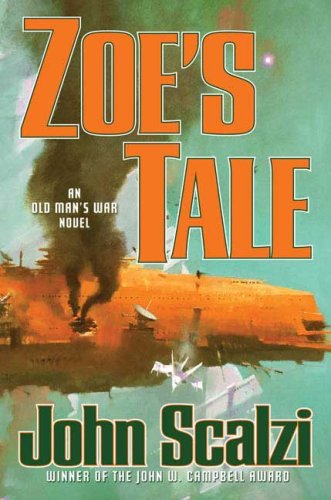
Zoe's Tale

The Graveyard Book

Editorial Reviews
From Publishers Weekly

In the touching fourth novel set in the Old Man's War universe, Scalzi revisits the events of 2007's The Last Colony from the perspective of Zoë, adopted daughter of previous protagonists Jane Sagan and John Perry. Jane and John are drafted to help found the new human colony of Roanoke, struggling against a manipulative and deceitful homeworld government, native werewolf-like creatures and a league of aliens intent on preventing all space expansion and willing to eradicate the colony if needed. Meanwhile, teenage Zoë focuses more on her poetic boyfriend, Enzo; her sarcastic best friend, Gretchen; and her bodyguards, a pair of aliens from a race called the Obin who worship and protect Zoë because of a scientific breakthrough made by her late biological father. Readers of the previous books will find this mostly a rehash, but engaging character development and Scalzi's sharp ear for dialogue will draw in new readers, particularly young adults. (Aug.)

From Booklist
At the close of the widely admired Old Man’s War trilogy, Scalzi hinted he would take a long break from his saga of seniors rejuvenated for interstellar battle. But reader demand has extracted one more installment. Zoe Boutin Perry is the adopted daughter of John Perry and Jane Sagan, heroes of the first and third installments (Old Man’s War, 2004; The Last Colony, 2007). Complicating her life as an otherwise ordinary, wisecracking 15-year-old is her status as a venerated idol of the Obin, an alien race who owe their self-awareness to an invention of Zoe’s late biological father. Accompanied everywhere by her overprotective Obin bodyguards, Hickory and Dickory, Zoe quickly realizes how critical the Obin are to her family’s survival when the Colonial Defense Force overseeing the Perrys’ colonization of a new world underhandedly pits them against a murderous alliance of alien races. Scalzi takes a calculated risk in adopting Zoe’s adolescent viewpoint, but it pays off in a captivating story. --Carl Hays

Review
“The Last Colony will kick your butt across the galaxy and make you care.” — Rick Kleffel, The Agony Column, on The Last Colony “Scalzi’s captivating blend of off-world adventure and political intrigue remains consistently engaging.” — Booklist on The Last Colony "In Heinleinesque fashion, the book is loaded with scenes of comradeship, isolation, ruthlessness and the protocols, which govern the lives of active-duty soldiers. But this is where Scalzi, famous for his blog ‘The Whatever,’ surpasses Heinlein. Scalzi weaves in subtle discussions of humanity's growing fear of aging and our simultaneous attraction and repulsion to the Frankenstein-like creatures we are able to create." — San Antonio Express-News on The Ghost Brigades

Product Description
How do you tell your part in the biggest tale in history?

I ask because it's what I have to do. I'm Zoe Boutin Perry: A colonist stranded on a deadly pioneer world. Holy icon to a race of aliens. A player (and a pawn) in a interstellar chess match to save humanity, or to see it fall. Witness to history. Friend. Daughter. Human. Seventeen years old.

Everyone on Earth knows the tale I am part of. But you don't know my tale: How I did what I did — how I did what I had to do — not just to stay alive but to keep you alive, too. All of you. I'm going to tell it to you now, the only way I know how: not straight but true, the whole thing, to try make you feel what I felt: the joy and terror and uncertainty, panic and wonder, despair and hope. Everything that happened, bringing us to Earth, and Earth out of its captivity. All through my eyes.

It's a story you know. But you don't know it all.

About the Author
JOHN SCALZI won the 2006 John W. Campbell Award for Best New Writer, and his debut novel Old Man’s War was a finalist for the Hugo Award. His other novels include The Ghost Brigades, The Last Colony, and The Android’s Dream. He lives in southern Ohio with his wife and daughter.

I lifted up my dad’s PDA and counted off the seconds with the two thousand other people in the room.

"Five! Four! Three! Two! One!"

And then there was no noise, because everyone’s attention—and I mean everyone’s—was glued to the monitors peppered around the Magellan’s common area. The screens, which had held starry skies in them, were blank and black, and everyone was holding their breath, waiting for what came next.

A world appeared, green and blue.
And we all went insane.

Because it was our world. It was Roanoke, our new home. We would be the first people to land there, the first people to settle there, the first people to live our lives there. And we celebrated seeing it for that first time, we two thousand settlers of Roanoke, all crammed into that common area, hugging and kissing and singing "Auld Lang Syne," because, well, what else do you sing when you come to a new world? A new world, new beginnings, a new year, a new life. New everything. I hugged my best friend Gretchen and we hollered into the microphone I had been using to count down the seconds, and hopped up and down like idiots.

When we stopped hopping, a whisper in my ear. "So beautiful," Enzo said.

I turned to look at him, at this gorgeous, beautiful boy who I was seriously considering making my boyfriend. He was a perfect combination: heart-flutteringly pretty and apparently entirely ignorant of the fact, because he’d been spending the last week trying to charm me with his words, of all things. Words! Like he didn’t get the teenage boy manual on how to be completely inarticulate around girls.

I appreciated the effort. And I appreciated the fact that when he whispered his words, he was looking at me and not the planet. I glanced over at my parents about six meters away, kissing to celebrate the arrival. That seemed like a good idea. I reached my hand behind Enzo’s head to draw him to me and planted one right on his lips. Our first kiss. New world, new life, new boyfriend.

What can I say. I was caught up in the moment.

Enzo didn’t complain. " ‘O brave new world, that has such people in it,’ " he said, after I let him breathe again.

I smiled at him, my arms still around his neck. "You’ve been saving that up," I said.

"Maybe," he admitted. "I wanted you to have a quality first kiss moment."

See. Most sixteen-year-old boys would have used a kiss as an excuse to dive straight for the boobs. He used it as an excuse for Shakespeare. A girl could do worse.

"You’re adorable," I said, kissed him again, then gave him a playful push and launched myself into my parents, breaking up their canoodling and demanding their attention. The two of them were our colony’s leaders, and soon enough they would barely have time to breathe. It was best I get in some quality time while I could. We hugged and laughed and then Gretchen yanked me back toward her.

"Look what I have," she said, and thrust her PDA in my face. It showed a vidcap of me and Enzo kissing.

"You evil little thing," I said.

"It’s amazing," Gretchen said. "It actually looks like you’re trying to swallow his entire face."

"Stop it," I said.

"See? Look," Gretchen tapped a button, and the vidcap played in slow motion. "Right there. You’re mauling him. Like his lips were made of chocolate."

I was trying very hard not to laugh, because she was actually right about that. "Wench," I said. "Give me that." I snatched the PDA from her with one hand, erased the .le, and handed it back. "There. Thank you."

"Oh, no," Gretchen said, mildly, taking the PDA.

"Learned your lesson about violating the privacy of others?" I said.

"Oh, yes," Gretchen said.

"Good," I said. "Of course, you already forwarded it to everyone we know before you showed it to me, didn’t you?"

"Maybe," Gretchen said, and put her hand to her mouth, eyes wide.

"Evil," I said, admiringly.

"Thank you," Gretchen said, and curtsied.

"Just remember I know where you live," I said.

"For the rest of our lives," Gretchen said, and then we did embarrassingly girly squeals and had another hug. Living the rest of your life with the same two thousand people ran the risk of being dead-bang boring, but not with Gretchen around.

We unhugged and then I looked around to see who else I wanted to celebrate with. Enzo was hovering in the background, but he was smart enough to know that I’d get back to

Him. I looked over and saw Savitri Guntupalli, my parents’ assistant, conferring with my dad very seriously about something. Savitri: She was smart and capable and could be wicked funny, but she was always working. I got between her and Dad and demanded a hug. Yes, I was all about the hugs. But, you know, look: You only get to see your new world for the first time once.

"Zoë," Dad said, "can I have my PDA back?"

I had taken Dad’s PDA because he’d set the exact time the Magellan would skip from the Phoenix system to Roanoke, and used it to count off the last few minutes before the jump. I had my own PDA, of course; it was in my pocket. No doubt the vidcap of me smooching Enzo was waiting for me in my in-box, just like it was in the in-boxes of all our friends. I made a note to myself to plot revenge against Gretchen. Sweet, merciless revenge. Involving witnesses. And farm animals. But for now I gave Dad back his PDA, gave him a peck on his cheek, and found my way back to Enzo.

"So," Enzo said, and smiled. God, he was even charming when monosyllabic. The rational part of my brain was lecturing me about how infatuation makes everything seem better than it is; the irrational part (meaning, most of me) was telling the rational part to get well and truly stuffed.

"So," I said back, not nearly as charmingly, but Enzo didn’t seem to notice.

"I was talking to Magdy," Enzo said.

"Uh-oh," I said.

"Magdy’s not so bad," Enzo said.

"Sure, for certain values of ‘not so bad,’ meaning ‘bad,’ " I said.

"And he said that he was talking to some of the Magellan crew," Enzo said, forging along (charmingly). "They told him about an observation lounge on the crew level that’s usually empty. He says we could get a great view of the planet there."

I glanced over Enzo’s shoulder, where Magdy was talking animatedly to Gretchen (or at her, depending on one’s point of view). "I don’t think the planet is what he’s hoping to view," I said.

Enzo glanced back. "Maybe not," he said. "Although to be fair to Magdy, certain people aren’t exactly trying hard not to be viewed."

I crooked an eyebrow at that; it was true enough, although I knew Gretchen was more into the flirting than anything else.

"And what about you?" I said. "What are you hoping to see?"

Enzo smiled and held up his hands, disarmingly. "Zoë," he said. "I just got to kiss you. I think I want to work on that a little more before moving on to anything else."

"Ooh, nicely said," I said. "Do these lines work on all the girls?"

"You’re the first girl I’ve tried them on," Enzo said. "So you’ll have to let me know."

I actually blushed, and gave him a hug. "So far, so good," I said.

"Good," Enzo said. "Also, you know. I’ve seen your bodyguards. I don’t think I want them to use me for target practice."

"What?" I said, mock-shocked. "You’re not frightened of Hickory and Dickory, are you? They’re not even here." Actually, Enzo has a perfectly good reason to be utterly terrified of Hickory and Dickory, who were already vaguely suspicious of him and would happily cycle him out an airlock if he did anything stupid with me. But there was no reason to let him know that yet. Good rule of thumb: When your relationship is minutes old, don’t freak out the new squeeze.

And anyway, Hickory and Dickory were sitting out this celebration. They were aware they made most of the humans nervous.

"I was actually thinking of your parents," Enzo said. "Although they seem to be missing, too." Enzo motioned with his head to where John and Jane had been standing a few minutes before; now neither of them were there. I saw Savitri leaving the common area as well, as if she suddenly had someplace to be.

"I wonder where they went," I said, mostly to myself.

"They’re the colony leaders," Enzo said. "Maybe now they have to start working."

"Maybe," I said. It was unusual for either John or Jane to disappear without telling me where they were going; it was just a common courtesy. I fought back the urge to message them on my PDA.

"So, the observation lounge," Enzo said, getting himself back to the topic at hand. "You want to check it out?"

"It’s on the crew deck," I said. "You think we might get in trouble?"

"Maybe," Enzo said. "But what can they do? Make us walk the plank? At worst they’ll just tell us to get lost. And until then we’ll have a heck of a view."

"All right," I said. "But if Magdy turns into all tentacles, I’m leaving. There are some things I don’t need to see."

Enzo laughed. "Fair enough," he said, and I snuggled into him a little. This new boyfriend thing was turning out just fine.

We spent some more time celebrating with our friends and their families. Then, after things had settled down enough, we followed Magdy and Gretchen through the Magellan and toward the crew observation lounge. I thought sneaking into the crew area might be a problem; not only was it easy, but a crew member coming out of an entrance held it open for us.

"Security is not a huge issue here on the Magellan," Gretchen said, back to me and Enzo, then looked down at our clasped hands and smiled at me. She was evil, sure, but she was also happy for me.

The Graveyard Book

The Graveyard Book

Editorial Reviews

Amazon.com Review
In The Graveyard Book, Neil Gaiman has created a charming allegory of childhood. Although the book opens with a scary scene--a family is stabbed to death by "a man named Jack” --the story quickly moves into more child-friendly storytelling. The sole survivor of the attack--an 18-month-old baby--escapes his crib and his house, and toddles to a nearby graveyard. Quickly recognizing that the baby is orphaned, the graveyard's ghostly residents adopt him, name him Nobody ("Bod"), and allow him to live in their tomb. Taking inspiration from Kipling’s The Jungle Book, Gaiman describes how the toddler navigates among the headstones, asking a lot of questions and picking up the tricks of the living and the dead. In serial-like episodes, the story follows Bod's progress as he grows from baby to teen, learning life’s lessons amid a cadre of the long-dead, ghouls, witches, intermittent human interlopers. A pallid, nocturnal guardian named Silas ensures that Bod receives food, books, and anything else he might need from the human world. Whenever the boy strays from his usual play among the headstones, he finds new dangers, learns his limitations and strengths, and acquires the skills he needs to survive within the confines of the graveyard and in wider world beyond. (ages 10 and up) -–Heidi Broadhead

From Bookmarks Magazine
Neil Gaiman's fantasies have entranced both younger readers and adults; this gothic fantasy, a coming-of-age story modeled after The Jungle Book and with slight nods to Harry Potter, will appeal to all ages. By juxtaposing the world of the dead with the world of the living, Gaiman creates a fantastical world where the thoughtful protagonist comes to understand the power of family as he experiences the fear, pains, confusions, and joys of growing up. Critics praised each illustrated chapter as its own little gem, with moments both tender and terrifying—and each equally exciting. The Graveyard Book is sure to become a book to last the ages.

From Booklist
*Starred Review* While a highly motivated killer murders his family, a baby, ignorant of the horrific goings-on but bent on independence, pulls himself out of his crib and toddles out of the house and into the night. This is most unfortunate for the killer, since the baby was his prime target. Finding his way through the barred fence of an ancient graveyard, the baby is discovered by Mr. and Mrs. Owens, a stable and caring couple with no children of their own—and who just happen to be dead. After much debate with the graveyard’s rather opinionated denizens, it is decided that the Owenses will take in the child. Under their care and the sponsorship of the mysterious Silas, the baby is named “Nobody” and raised among the dead to protect him from the killer, who relentlessly pursues him. This is an utterly captivating tale that is cleverly told through an entertaining cast of ghostly characters. There is plenty of darkness, but the novel’s ultimate message is strong and life affirming. Although marketed to the younger YA set, this is a rich story with broad appeal and is highly recommended for teens of all ages. Grades 6-10. --Holly Koelling

Review
""The Graveyard Book manages the remarkable feat of playing delightful jazz riffs on Kipling’s classic Jungle Books. One might call this book a small jewel, but in fact it’s much bigger within than it looks from the outside." -- Peter S. Beagle, author of The Last Unicorn

"After finishing The Graveyard Book, I had only one thought -- I hope there’s more. I want to see more of the adventures of Nobody Owens, and there is no higher praise for a book." -- Laurell K. Hamilton, author of the Anita Blake: Vampire Hunter novels

"It takes a graveyard to raise a child. My favorite thing about this book was watching Bod grow up in his fine crumbly graveyard with his dead and living friends. The Graveyard Book is another surprising and terrific book from Neil Gaiman." -- Audrey Niffenegger, author of The Time Traveler's Wife

"The Graveyard Book is endlessly inventive, masterfully told and, like Bod himself, too clever to fit into only one place. This is a book for everyone. You will love it to death." -- Holly Black, co–creator of The Spiderwick Chronicles

The Graveyard Book is everything everyone loves about Neil Gaiman, only multiplied many times over, a novel that showcases his effortless feel for narrative, his flawless instincts for suspense, and above all, his dark, almost silky sense of humor -- Joe Hill, author of Heart–Shaped Box

Review
"The Graveyard Book manages the remarkable feat of playing delightful jazz riffs on Kipling's classic Jungle Books. One might call this book a small jewel, but in fact it's much bigger within than it looks from the outside." (Peter S. Beagle, author of The Last Unicorn )

"I wish my younger self could have had the opportunity to read and re-read this wonderful book, and my older self wishes that I had written it." (Garth Nix, author of The Abhorsen Trilogy )

"This is, quite frankly, the best book Neil Gaiman has ever written. How he has managed to combine fascinating, friendly, frightening and fearsome in one fantasy I shall never know, but he has pulled it off magnificently - perfect for Halloween and any other time of the year." (Diana Wynne Jones, author of The Chronicles of Chrestomanci )

"THE GRAVEYARD BOOK, by turns exciting and witty, sinister and tender, shows Gaiman at the top of his form. In this novel of wonder, Neil Gaiman follows in the footsteps of long-ago storytellers, weaving a tale of unforgettable enchantment." (New York Times Book Review )

The Graveyard Book is everything everyone loves about Neil Gaiman, only multiplied many times over, a novel that showcases his effortless feel for narrative, his flawless instincts for suspense, and above all, his dark, almost silky sense of humor. (Joe Hill, author of Heart-Shaped Box )

"Wistful, witty, wise-and creepy. This needs to be read by anyone who is or has ever been a child." (Kirkus Reviews (starred review) )

"This is an utterly captivating tale that is cleverly told through an entertaining cast of ghostly characters. There is plenty of darkness, but the novel's ultimate message is strong and life affirming..this is a rich story with broad appeal. " (Booklist (starred review) )

"The Graveyard Book is endlessly inventive, masterfully told and, like Bod himself, too clever to fit into only one place. This is a book for everyone. You will love it to death." (Holly Black, co-creator of The Spiderwick Chronicles )

"It takes a graveyard to raise a child. My favorite thing about this book was watching Bod grow up in his fine crumbly graveyard with his dead and living friends. The Graveyard Book is another surprising and terrific book from Neil Gaiman." (Audrey Niffenegger, author of The Time Traveler's Wife )

"After finishing The Graveyard Book, I had only one thought - I hope there's more. I want to see more of the adventures of Nobody Owens, and there is no higher praise for a book." (Laurell K. Hamilton, author of the Anita Blake: Vampire Hunter novels )

"Lucid, evocative prose and dark fairy-tale motifs imbue the story with a dreamlike quality. .this ghost-story-cum-coming-of-age-novel as readable as it is accomplished." (Horn Book (starred review) )

"Like a bite of dark Halloween chocolate, this novel proves rich, bittersweet and very satisfying." (Washington Post )

Product Description
Nobody Owens, known to his friends as Bod, is a normal boy.
He would be completely normal if he didn't live in a sprawling graveyard, being raised and educated by ghosts, with a solitary guardian who belongs to neither the world of the living nor of the dead.

There are dangers and adventures in the graveyard for a boy-an ancient Indigo Man beneath the hill, a gateway to a desert leading to an abandoned city of ghouls, the strange and terrible menace of the Sleer.

But if Bod leaves the graveyard, then he will come under attack from the man Jack—who has already killed Bod's family. . . .

Beloved master storyteller Neil Gaiman returns with a luminous new novel for the audience that embraced his New York Times bestselling modern classic Coraline. Magical, terrifying, and filled with breathtaking adventures, the graveyard book is sure to enthrall readers of all ages.

About the Author
Neil Gaiman is the author of many highly acclaimed and award-winning books for children and adults, including the New York Times bestseller Coraline. He is also the author of the picture books The Wolves in the Walls and The Day I Swapped My Dad for Two Goldfish, both illustrated by Dave McKean, Blueberry Girl, illustrated by Charles Vess, and The Dangerous Alphabet, illustrated by Gris Grimly. Among his many awards are the World Fantasy Award, the Hugo Award, the Nebula Award, and the Bram Stoker Award. Originally from England, Gaiman now lives in the United States.

Thursday, May 28, 2009

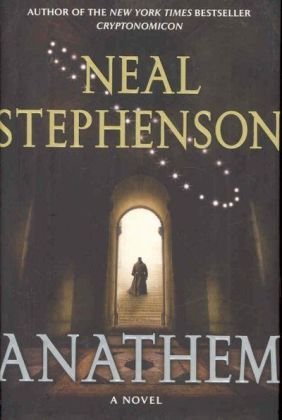
Anathem

What I Saw And How I Lied

Editorial Reviews

From Publishers Weekly
In this follow-up to his historical Baroque Cycle trilogy, which fictionalized the early-18th century scientific revolution, Stephenson (Cryptonomicon) conjures a far-future Earth-like planet, Arbre, where scientists, philosophers and mathematicians—a religious order unto themselves—have been cloistered behind concent (convent) walls. Their role is to nurture all knowledge while safeguarding it from the vagaries of the irrational saecular outside world. Among the monastic scholars is 19-year-old Raz, collected into the concent at age eight and now a decenarian, or tenner (someone allowed contact with the world beyond the stronghold walls only once a decade). But millennia-old rules are cataclysmically shattered when extraterrestrial catastrophe looms, and Raz and his teenage companions—engaging in intense intellectual debate one moment, wrestling like rambunctious adolescents the next—are summoned to save the world. Stephenson's expansive storytelling echoes Walter Miller's classic A Canticle for Leibowitz, the space operas of Larry Niven and the cultural meditations Douglas Hofstadter—a heady mix of antecedents that makes for long stretches of dazzling entertainment occasionally interrupted by pages of numbing colloquy. (Sept.)

From Bookmarks Magazine
Stephenson has never been an easy writer to pin down, and he has a reputation for not always wearing his erudition lightly. Particularly in his later books—and that now includes Anathem—readers are vetted at the door before being invited into the author’s labyrinthine worlds. The early books were held up alongside the work of William Gibson, Bruce Sterling, and other cyberpunk gods, though in the last decade Stephenson has carved a niche as one of the most ambitious writers working today in any genre. Anathem is intellectually rigorous and exceedingly complex, even to the point, as the Washington Post avows, of being “grandiose, overwrought and pretty damn dull.” Others complained of too much abstraction. Stephenson’s fans are legion, however, and many will add Anathem to their list of must-read doorstops.

Review
"'The only catch to reading a novel as imposingly magnificent as this is that for the next few months, everything else seems small and obvious by comparison.' Christopher Brookmyre, Guardian 'Anathem is a brilliant, playful tour of the terrain where logic, mathematics, philosophy and quantum physics intersect, a novel of ideas par excellence, melding wordplay and mathematical theory with a gripping, human adventure.' The Times 'I think this novel is wonderful... Anathem is a call to move into the world.' Andrew McKie, Daily Telegraph 'Neal Stephenson's vertiginous new novel [holds], for me, a boundlessly engaging fascination that comes at the price of being made to feel infinitesimally small: not merely as a human being, but as a writer, too... The only catch to reading a novel as imposingly magnificent as this is that for the next few months, everything else seems small and obvious by comparison.' Christopher Brookmyre, Guardian 'You find yourself enveloped in the atmosphere of a good library, one populated by a cast of characters whose talking is anything but annoying - and often illuminating. Fabulous.' Jonathan Wright, SFX Magazine" --This text refers to the Paperback edition.

Review

"A tour-de-force of world building and high-concept speculation, wrapped around a page-turning plot." (St. Louis Post-Dispatch on ANATHEM )

"A masterpiece...mind-bogglingly ambitious...readers will delight in puzzling out the historical antecedents in philosophy, science, mathematics, and art that Stephenson riffs on with his customary quicklsilver genius...it's one of the most thought-provoking novels I've ever read, and also one of the most engaging." (Locus, Paul Witcover, on ANATHEM )

"The Seattle writer is kind of a cross between William Gibson and Richard Powers, hard-wired to tell stories, explore technology and riff on anything that catches his fancy." (The Oregonian (Portland) on ANATHEM )

"A daring feat of speculative fiction.ANATHEM offers the reader a luscious arrangement of words, jokes, and speculations." (Boston Globe )

"[R]avishingly brilliant, outrageously ambitious.ANATHEM is thought-provoking fun, at turns a post-graduate seminar of philosophy and physics, and a rousing yarn with characters you care about." (Orlando Sentinel on ANATHEM )

"Suddenly, novels of ideas are cool again." (io9 on ANATHEM )

"Clever and intricate...truly ingenious...it's brilliance is undeniable." (Locus, Gary K. Wolfe on ANATHEM )

"As with Stephenson's previous work, plot and character are wrought to the highest standards of literary fiction but they're scarcely as fascinating as the worlds he conjures up. If there's anything more readable than ANATHEM it should probably be banned." (Word (UK) on ANATHEM )

"In Anathem, Stephenson creates a religion for skeptics and nerds." (Austin American-Statesman on ANATHEM )

"Stephenson writes in twists and turns, double-backs and cul-de-sacs, winding tunnels and fast-moving tracks. It's a Rube Goldberg sort of book: intricate, sometimes difficult to follow but always fascinating to read." (Grand Rapids Press on ANATHEM )

"The world Stephenson builds is richly visual, its complicated social politics are convincingly detailed, and its cool and conflicted heroes struggle with thrilling intellectual puzzles while they are tested in epic physical adventures." (Slate, Best of 2008 List, on ANATHEM )

[R]avishingly brilliant, outrageously ambitious.Stephenson embarks on a mission of world-building, and he is thoroughly successful at it." (South Florida Sun Sentinel on ANATHEM )

"Stephenson's expansive storytelling echoes Walter Miller's classic A Canticle for Leibowitz, the space operas of Larry Niven and the cultural meditations of Douglas Hofstadter - a heady mix of antecedents that makes for long stretches of dazzling entertainment." (Publishers Weekly on ANATHEM )

"[R]iveting idea porn." (Details on ANATHEM )

"What ever happened to the great novel of ideas? It has morphed into science fiction, and Stephenson is its foremost practitioner. A-" (Time magazine on ANATHEM )

"[O]ne of Stephenson's best novels.a captivating blend of culture clash, deductive reasoning and pure action." (Columbus Dispatch on ANATHEM )

"Anathem is a challenge: Make yourself one of the avout. Make yourself a scholar, and try to understand the world a little differently." (Eugene Weekly on ANATHEM )

"It's almost impossible to not be impressed by Anathem; there's simply too much erudition, wit, craft and risk-taking." (San Francisco Chronicle on ANATHEM )

"Learned, witty, weirdly torqued, emotionally complex, politically astute, and often darkly comic.ANATHEM is an audacious work by a highly intelligent imagination, a delightfully learned text." (Edmonton Journal (Alberta) on ANATHEM )

"Anathem is a brilliant, playful tour of the terrain where logic, mathematics, philosophy and quantum physics intersect, a novel of ideas par excellence, melding wordplay and mathematical theory with a gripping, human adventure." (London Times on ANATHEM )

"Stephenson displays his ingenuity when it comes to mixing science, sociology and satire with swashbuckling adventure. Anathem marries extensive scientific and philosophical dialogues to cliffhangers, hi-tech warfare and derring-do." (Sunday Sun (UK) on ANATHEM )

"The cult legend's newest book, Anathem, [is] destined to be an instant sci-fi classic." (Popular Mechanics on ANATHEM )

"A sprawling disquisition.[a] logophilic treat for those who like their alternate worlds big, parodic and ironic." (Kirkus Reviews on ANATHEM )

"This is a book about science and philosophy which demands the full concentration of the reader -a worthwhile, smart, exciting read." (Time Out London )

"He mashes up genres with the flair of Thomas Pynchon and the intellect of William Gibson." (Winnipeg Free Press on ANATHEM )

"Reading Anathem is a humbling experience." (Washington Post on ANATHEM )

"A magnificent achievement. " (Booklist (starred review) on ANATHEM )

"Blending quantum physics, phenomenological philosophy and various other fun hobbies...Stephenson's enthusiasm to share his theories and explanations is infectious...think "The Name of the Rose" crossed with "Dune"...genuinely fascinating brain food." (The Oregonian (Portland) on ANATHEM )

"Anathem duly marries extensive dialogues on quantum mechanics and the nature of consciousness to literal cliffhangers, hi-tech warfare and derring-do." (Leicester Mercury on ANATHEM )

"Anyone who has read Stephenson's Baroque Cycle will be familiar with his ingenuity when it comes to mixing science, sociology and satire with swashbuckling adventure, and ANATHEM duly marries extensive dialogues on quantum mechanics and the nature of consciousness to literal cliffhangers, high-tech warfare and general derring-do." (The Examiner (Ireland) on ANATHEM )

Product Description
Anathem, the latest invention by the New York Times bestselling author of Cryptonomicon and The Baroque Cycle, is a magnificent creation: a work of great scope, intelligence, and imagination that ushers readers into a recognizable—yet strangely inverted—world.

Fraa Erasmas is a young avout living in the Concent of Saunt Edhar, a sanctuary for mathematicians, scientists, and philosophers, protected from the corrupting influences of the outside "saecular" world by ancient stone, honored traditions, and complex rituals. Over the centuries, cities and governments have risen and fallen beyond the concent's walls. Three times during history's darkest epochs violence born of superstition and ignorance has invaded and devastated the cloistered mathic community. Yet the avout have always managed to adapt in the wake of catastrophe, becoming out of necessity even more austere and less dependent on technology and material things. And Erasmas has no fear of the outside—the Extramuros—for the last of the terrible times was long, long ago.

Now, in celebration of the week-long, once-in-a-decade rite of Apert, the fraas and suurs prepare to venture beyond the concent's gates—at the same time opening them wide to welcome the curious "extras" in. During his first Apert as a fraa, Erasmas eagerly anticipates reconnecting with the landmarks and family he hasn't seen since he was "collected." But before the week is out, both the existence he abandoned and the one he embraced will stand poised on the brink of cataclysmic change.

Powerful unforeseen forces jeopardize the peaceful stability of mathic life and the established ennui of the Extramuros—a threat that only an unsteady alliance of saecular and avout can oppose—as, one by one, Erasmas and his colleagues, teachers, and friends are summoned forth from the safety of the concent in hopes of warding off global disaster. Suddenly burdened with a staggering responsibility, Erasmas finds himself a major player in a drama that will determine the future of his world—as he sets out on an extraordinary odyssey that will carry him to the most dangerous, inhospitable corners of the planet . . . and beyond.

About the Author
Neal Stephenson is the author of seven previous novels. He lives in Seattle, Washington.

From AudioFile
In a sanctuary in another universe, scientists, philosophers, and mathematicians are protected from the outside world. The parallels to a cloister are accentuated by the music introducing each chapter, which is reminiscent of Gregorian chant--but different. Similarly, this world is like Earth, and the culture is like Western culture on Earth--but different. A lover of wordplay, Stephenson precedes each chapter with a definition, which he reads. This book is not for the faint of heart, but William Dufris and the rest of the cast make the audiobook a good option. Dufris is stalwart in his engagement with the characters, the plot, and the development of the cosmology. He brings out the characters' personalities and creates a sense of wonder as the complexities unfold. J.E.M. © AudioFile 2009, Portland, Maine --This text refers to the Audio CD edition.

What I Saw And How I Lied

What I Saw And How I Lied

Editorial Reviews

From Booklist

In this sophisticated thriller, 15-year-old Evie grows up quickly when she discovers her adored parents are not the people she thought they were. While on vacation in Palm Beach in 1947, Evie’s parents, Joe and Bev, get involved in a shady business deal with the Graysons, another couple on holiday. Meanwhile, Evie begins a flirtation with Peter, a handsome ex-GI who served with Joe and just happens to be staying at their hotel. Evie soon learns that Peter’s presence is no coincidence and that he threatens to uncover a terrible secret that Joe has kept since the war. Then Bev, Joe, and Peter go boating, but only two of them return. Evie must sort through secrets, lies, and her own grief to find the truth. Using pitch-perfect dialogue and short sentences filled with meaning, Blundell has crafted a suspenseful, historical mystery that not only subtly explores issues of post–WWII racism, sexism, and socioeconomic class, but also realistically captures the headiness of first love and the crushing realization that adults are not all-powerful. Grades 8-12. --Jennifer Hubert

Review
Blundell, author of Star Wars novelizations, turns out a taut, noirish mystery/coming-of-age story set in 1947; it's easy to picture it as a film starring Lana Turner, who is mentioned in these pages. When first met, 15-year-old Evie and her best friend are buying chocolate cigarettes to practice smoking. Evie sheds that innocence on a trip to Florida, where her stepfather, Joe, back from the war in Europe, abruptly takes her and her beautiful mother, Beverly, and where Evie falls in love with glamorous Peter, an army buddy whom Joe is none too happy to see. But after a boating accident results in a suspicious death and an inquest, Evie is forced to revisit her romance with Peter and her relationships with Joe and her mother, and to consider that her assumptions about all three may have been wrong from the beginning. Blundell throws Evie's inexperience into high relief with slangy, retro dialogue: Peter calls Evie pussycat ; Beverly says her first husband kicked through love like it was dust and he kept on walking. Readers can taste Evie's alienation and her yearning; it's a stylish, addictive brew. --Publisher's Weekly

About the Author
JUDY BLUNDELL lives in Katonah, New York, with her husband and daughter. Under a pen name, she has written many New York Times bestselling novels.

Shadow Country

Shadow Country

Editorial Reviews

From Publishers Weekly

Starred Review. Matthiessen's Watson trilogy is a touchstone of modern American literature, and yet, as the author writes in a foreword of this reworking, with the publication of Killing Mister Watson, Lost Man's River and Bone by Bone, he felt, after twenty years of toil... frustrated and dissatisfied. So after six or seven years of re-creation—rewriting many passages, compressing the timeline, shortening the work by some 400 pages and fleshing out supporting cast members (notably black farmhand Henry Short)—the three books are in one volume for the first time, and the result is remarkable. Florida sugarcane farmer and infamous murderer—the latter bit according to legend, of course—Edgar J. Watson is brought to life through marvelous eyewitness accounts and journal entries from friends, family and enemies alike. Book One (formerly Killing Mister Watson) creates a vivid portrait of the untamed southwest Florida of the late 19th and early 20th centuries, and recounts Watson's life—with questionable accuracy—beginning with his arrival in south Florida and replaying key events leading up to his being gunned down in the swamps. Watson, who stands accused of murdering a young couple who won't leave his land, is roundly despised and feared, so much so that parents frighten their children into obedience by threatening a visit from Watson. The second book takes place several decades after Watson's murder and relates the travails of Watson's son, Lucius, now a WWI veteran and scholar, as he tries to write a true account of his father's life. Lucius journeys back to his childhood home in search of answers from the same people who saw his father killed. As he investigates the contradictory claims and rumors (like that of a Watson Pay Day, when Watson would murder his farmhands rather than pay them), he tracks down his long-lost brother, Robert, and learns a horrible family secret. The final piece is perhaps the best, taking the form of Watson's chilling memoir. Recounting his life, from the years of paternal abuse right up until his jaw-dropping perspective on the day of his death, Watson reveals his strained relationship with his children, a personality crisis with his scabrous alter ego and the truth behind the many myths. Where Watson was a magnificent character before, he comes across as nothing short of iconic here; it's difficult to find another figure in American literature so thoroughly and convincingly portrayed. When Watson delivers his final line, it's as close as most will come to witnessing a murder. (Apr.)

From Bookmarks Magazine
Critics described the three stand-alone Watson novels as magnificent epics, and Shadow Country, a seamless weaving and slimming down of these works, as a masterpiece. As in all his writing, Matthiessen offers a beautiful homage to place—the raw, untamed Everglades of the late 19th century—while trying to understand the costs that accompanied the conquering of the frontier. All the stand-alone sections have their strengths as they explore the motivations behind Watson's death. Despite its heft, most reviewers described Shadow Country as a surprisingly fast read. Only the reviewer from the New York Times Book Review expressed complaints about what felt like one big literary contrivance. But the rest agreed: "This mighty book is the potent distillation of a tale that was brilliantly told to begin with" (St. Petersburg Times).

Review
Magnificent and capacious....I'll just say right here that the book took my sleeve and like the ancient mariner would not let go....Finally now we have these books welded like a bell, and with Watson's song the last sound, all the elements fuse and resonate....a breathtaking saga. --Los Angeles Times

Matthiessen is writing about one man's life in Shadow Country, but he is also writing about the life of the nation over the course of half a century. Watson's story is essentially the story of the American frontier, of the conquering of wild lands and people, and of what such empires cost....Even among a body of work as magnificent as Matthiessen's, this is his great book. --St. Petersburg Times

Matthiessen's Watson trilogy is a touchstone of modern American literature....after six or seven years of re-creation...the three books are in one volume for the first time, and the result is remarkable....Where Watson was a magnificent character before, he comes across as nothing short of iconic here; it's difficult to find another figure in American literature so thoroughly and convincingly portrayed. --Publishers Weekly (starred review) --This text refers to the CD-ROM edition.


Product Description

2008 NATIONAL BOOK AWARD WINNER

Peter Matthiessen’s great American epic–Killing Mister Watson, Lost Man’s River, and Bone by Bone–was conceived as one vast mysterious novel, but because of its length it was originally broken up into three books. In this bold new rendering, Matthiessen has cut nearly a third of the overall text and collapsed the time frame while deepening the insights and motivations of his characters with brilliant rewriting throughout. In Shadow Country, he has marvelously distilled a monumental work, realizing his original vision.

Inspired by a near-mythic event of the wild Florida frontier at the turn of the twentieth century, Shadow Country reimagines the legend of the inspired Everglades sugar planter and notorious outlaw E. J. Watson, who drives himself relentlessly toward his own violent end at the hands of neighbors who mostly admired him, in a killing that obsessed his favorite son.

Shadow Country traverses strange landscapes and frontier hinterlands inhabited by Americans of every provenance and color, including the black and Indian inheritors of the archaic racism that, as Watson’s wife observed, "still casts its shadow over the nation."

Peter Matthiessen’s lyrical and illuminating work in the Watson narrative has been praised highly by such contemporaries as Saul Bellow, William Styron, and W. S. Merwin. Joseph Heller said "I read it in great gulps, up each night later than I wanted to be, in my hungry impatience to find out more and more."


Praise for Shadow Country
“Shadow Country is altogether gripping, shocking, and brilliantly told, not just a tour de force in its stylistic range, but a great American novel, as powerful a reading experience as nearly any in our literature. This magnificent, sad masterpiece about race, history, and defeated dreams can easily stand comparison with Ralph Ellison's Invisible Man and Robert Penn Warren's All the King's Men. Little wonder, too, that parts of the story of E.J. Watson call up comparisons with Dostoevsky, Conrad, and, inevitably, Faulkner. In every way, Shadow Country is a bravura performance, at once history, fiction, and myth–as well as the capstone to the career of one of the most admired and admirable writers of our time.” — The New York Review of Books

“Magnificent and capacious…. I'll just say right here that the book took my sleeve and like the ancient mariner would not let go. Matthiessen has made his three-part saga into a new thing…. Finally now we have these books welded like a bell, and with Watson's song the last sound, all the elements fuse and resonate….a breathtaking saga.” — The Los Angeles Times

“Gorgeously written and unfailingly compelling, Shadow Country is the exhilarating masterwork of [Matthiessen’s] career, every bit as ambitious as Moby Dick.” — National Geographic Adventure magazine

“Peter Mattiessen consolidates his epic masterpiece of Florida -- and crafts something even better…[He] deserves credit for decades of meticulous research and obsessive details and soaring prose that converted the Watson legend into critically acclaimed literature….Anyone wanting an explanation for what happened to Florida can now find it in a single novel, a great American novel.” — Miami Herald

“Matthiessen is writing about one man's life in Shadow Country, but he is also writing about the life of the nation over the course of half a century. Watson's story is essentially the story of the American frontier, of the conquering of wild lands and people, and of what such empires cost….Even among a body of work as magnificent as Matthiessen's, this is his great book.” — St. Petersburg Times

“Shadow Country is a magnum opus. Matthiessen is meticulous in creating characters, lyrical in describing landscapes, and resolute in dissecting the values and costs that accompanied the development of this nation.” --Seattle Times

“Shadow Country” is an ambitious, lasting, and meaningful work of literature that will not soon fade away. It is a testament to Mr. Matthiessen’s integrity as an artist that he felt compelled to return to the Watson material to produce this work and satisfy his original vision….a multifaceted work that can be read variously or simultaneously as a psychological novel, a historical novel, a morality tale, a political allegory, or a mystery. -- East Hampton Star

“Matthiessen’s Watson trilogy is a touchstone of modern American literature…this reworking…is remarkable….Where Watson was a magnificent character before, he comes across as nothing short of iconic here; it’s difficult to find another figure in American literature so thoroughly and confincingly portrayed.” — Publishers Weekly, starred review, Pick of the Week

“Matthiessen has reinvigorated and rejoined the trilogy’s novels…a mosaic about the life and lynch-mob death of a turn-of-the century Florida Everglades sugar planter and serial killer named E. J. Watson — into the 900-plus-page Shadow Country. This is no mere repackaging: Four hundred pages were cut from the novels, previous background characters now tromp to the foreground, and the books’ rangy, Faulknerian essence is rendered more digestible. Deliciously digestible, that is; this is a thick porterhouse of a novel.” — Men’s Journal

"The fiction of Peter Matthiessen is the reason a lot of people in my generation decided to be writers. No doubt about it. SHADOW COUNTRY lives up to anyone's highest expectations for great writing." -- Richard Ford

"Peter Matthiessen is a brilliantly gifted and ambitious writer, an inspired anatomist of the American mythos. His storytelling skills are prodigious and his rapport with his subject is remarkable." -- Joyce Carol Oates

"Peter Matthiessen's work, both in fiction and non-fiction, has become a unique achievement in his own generation and in American literature as a whole. Everything that he has written has been conveyed in his own clear, deeply informed, elegant and powerful prose. The Watson saga-in-the-round, to which he has devoted nearly thirty years, is his crowning achievement. SHADOW COUNTRY, his distillation of the earlier trilogy, is his transmutation of it to represent his original vision. It is the quintessence of his lifelong concerns, and a great legacy." -- W.S. Merwin

About the Author
Peter Matthiessen has written eight novels, including At Play in the Fields of the Lord (nominated for the National Book Award) and Far Tortuga, and also a book of short stories, On the River Styx. His parallel career as a naturalist and environmental activist has produced numerous acclaimed works of nonfiction, most of them serialized in The New Yorker; these include The Tree Where Man Was Born (another National Book Award nominee) and The Snow Leopard (a National Book Award winner). He was elected to the American Academy of Arts and Letters in 1974.

ERSKINE THOMPSON
We never had no trouble from Mister Watson, and from what we seen, he never caused none, not amongst his neighbors. All his trouble come to him from the outside.

E. J. Watson turned up at Half Way Creek back in 1892, worked on the produce farms awhile, worked in the cane. Hard worker, too, but it don’t seem like he hoed cane for the money, it was more like he wanted a feel for our community. Strong, good-looking feller in his thirties, dark red hair, well made, thick through the shoulders but no fat on him, not in them days. Close to six foot and carried himself well, folks noticed him straight off and no one fooled with him. First time you seen the man you wanted him to like you—he was that kind. Wore a broad black hat and a black frock coat with big pockets, made him look bulky. Times we was cutting buttonwood with ax and hand saw, two-three cords a day—that’s hot, hard, humid work, case you ain’t done it—Ed Watson never changed that outfit. Kept that coat on over his denim coveralls, he said, cause he never knew when he might expect some company from up north. Might smile a little when he said that but never give no explanation.

Folks didn’t know where this stranger come from and nobody asked. You didn’t ask a man hard questions, not in the Ten Thousand Islands, not in them days. Folks will tell you different today, but back then there weren’t too many in our section that wasn’t on the run from someplace else. Who would come to these rain-rotted islands with not hardly enough high ground to build a outhouse, and so many miskeeters plaguing you in the bad summers you thought you’d took the wrong turn straight to Hell?

Old Man William Brown was cutting cane, and he listened to them men opining how this Watson feller was so able and so friendly. Old Man William took him a slow drink of water, give a sigh. Willie Brown said, “Well, now, Papa, is that sigh a warnin?” And his daddy said, “I feel somethin, is all. Same way I feel the damp.” They all respected Old Man William, but there weren’t one man in the cane that day that took him serious.

All the same, we noticed quick, you drawed too close to E. J. Watson, he eased out sideways like a crab, gave himself room. One time, my half-uncle Tant Jenkins come up on him letting his water, and Mister Watson come around so fast Tant Jenkins thought this feller aimed to piss on him. By the time Tant seen it weren’t his pecker he had in his hand, that gun was halfway back into them coveralls, but not so fast he could not be sure of what he seen.

Being brash as well as nervous, Tant says, “Well, now, Mister Watson! Still es-pectin company from the North?” And Watson says, very agreeable, “Any company that shows up unexpected will find me ready with a nice warm welcome.”

Ed Watson had money in his pocket when he come to Half Way Creek, which ain’t none of my business, but in all the years I knew him, right up till near the end, he always come up with money when he had to. We never knew till later he was on the dodge, but Half Way Creek was too handy to the lawmen for his liking. Ain’t nothing much out there today but a few old cisterns, but Half Way Creek had near a dozen families then, more than Everglade or Chokoloskee. Course back in them days there weren’t hardly a hundred souls in that whole hundred mile of coast south to Cape Sable.

Mister Watson weren’t at Half Way Creek but a few days when he paid cash money for William Brown’s old schooner. Ain’t many would buy a sixty-foot schooner that didn’t know nothing about boats. Time he was done, Ed Watson was one of the best boatmen on this coast.

Mister Watson and me cut buttonwood all around Bay Sunday, run it over to Key West, three dollars a cord. I seen straight off that Ed. J. Watson meant to go someplace, I seen my chance, so I signed on to guide him down around the Islands. I was just back from a year down there, plume hunting for Chevelier; I turned that Frenchman over to Bill House. We was just young fellers then, a scant fourteen. No school on Chokoloskee so you went to work.

Folks ask, “Would you have worked for Watson if you knowed about him what you know today?” Well, hell, I don’t know what I know today and they don’t neither. With so many stories growed up around that feller, who is to say which ones was true? What I seen were a able-bodied man, mostly quiet, easy in his ways, who acted according to our ideas of a gentleman. And that was all we had, ideas, cause we had never seen one in this section, unless you would count Preacher Gatewood, who brought the Lord to Everglade back in 1888 and took Him away again when he departed, the men said. Some kind of a joke, wouldn’t surprise me.

Most of our old Glades pioneers was drifters and deserters from the War Between the States who never got the word that we was licked. Moonshiners and plume hunters, the most of ’em. Thatch lean-tos and a skiff and pot and rifle, maybe a jug of homemade lightning for fighting off the skeeters in the evening. Had earth in a tub, made their fire in the skiff, had coffee going morning, noon, and night.

Man on the run who used the name Will Raymond was camped with a woman and her daughter in a palmetta shack on that big bend in Chatham River, living along on grits and mullet, taking some gator hides and egret plumes, selling bad moonshine to the Injuns. We seen plenty like Will Raymond in the Islands, knife-mouthed piney-woods crackers, hollow-eyed under wool hats, and them bony-cheeked tall women with lank black hair like horse mane. Go crazy every little while, shoot some feller through the heart. Will done that more’n once in other parts, we heard, and got that habit. Seems the law wanted him bad—dead or alive, as you might say. When deputies come a-hunting him out of Key West, Will said nosir, he’d be damned if he’d go peaceable, and he whistled a bullet past their heads to prove it, but he was peaceable as the law allows by the time the smoke cleared. The law invited the Widder Raymond to accompany his mangy carcass on a free boat ride to Key West, and she said, “Thankee, boys, I don’t mind if I do.”

Old Man Richard Harden, then the Frenchman, was on Chatham Bend before him, and the Injuns before that; biggest Injun mound south of Chokoloskee Island. Most of the Bend was overgrowed cause none of ’em weren’t farmers, and Mister Watson would cuss Will Raymond every time we went downriver, saying how pitiful it was to see that good ground going to waste. One day Mister Watson went ashore, made an offer for the quit-claim, and Raymond come out with a old musket, run him off. Fortnight later, a posse come a hundred mile north from Key West and killed that pesky feller, and next thing you know, Ed Watson tracked the widder down and bought the quit-claim, two hundred fifty dollars. That was a pile of cash in them days, but what he got was forty acres of good soil, protected on three sides by mangrove tangle: anybody who come huntin E. J. Watson would have to come straight at him, off the river.

E. J. Watson had grand plans, about the only feller down there as ever did. Used to talk about dredging out the mouth of Chatham River, make a harbor for that wild southwest coast. Meantime, he sunk buttonwood posts to frame up a new cabin, had wood shutters and canvas flaps on the front windows, brought in a woodstove and a kerosene lamp and a galvanized tub for anyone might care to bath. We ate good, too, fish and wild meat, sowbelly and grits, had a big iron skillet and made johnnycakes: put some lard to his good flour, cooked ’em up dry. I remembered them big johnnycakes all my whole life.

Will Raymond’s shack weren’t fit for hogs, Mister Watson said, had to patch it up before he put his hogs in it. We had two cows, and chickens, too, but that man had a real feel for hogs. He loved hogs and hogs loved him, come to his call from all over the Bend, I can hear him calling down them river evenings to this day. Brought ’em in at night cause of the panthers, fed ’em garden trash and table slops and such so they wouldn’t get no fishy taste like them old razorbacks at Hardens that fed on crabs and lowlife when the tide was out. Kept a old roan horse to pull his plow, break that hard shell ground, and sometimes he’d ride around his farm like it was his old family plantation back in South Carolina.

Mister Watson experimented with all kinds of vegetables and tobacco. Only victuals we traded for was salt and coffee: bought hard green coffee beans, wrapped ’em in burlap. hammered ’em to powder with a mallet. Made our own grits and sugar and cane spirits—what we called white lightning. Seasons when vegetables done poor, we’d pole inland up the creeks and out across the Glades to the piney ridges, get Injun greens and coontie root for starch and flour, cut some cabbage-palm tops in the hammocks. Worked his crew like niggers and worked like a nigger alongside of us. Brung in regular niggers from Fort Myers, and they worked hard, too—that man knew how to get work from his help! Them boys was scared to death of him, he could be rough. But they sure liked to listen to his stories, least when he weren’t drinking. Told ’em nigger jokes that set ’em giggling for hours—nerves, maybe. I never did get them fool jokes. Me’n niggers just don’t think the same.

Ed Watson was the first man since the Injuns to hack down all that thorn on Chatham Bend. Dug out palmetta roots thick as his leg, raked the shell out of that black soil and made a farm. Grew all kinds of vegetables, grew cane for syrup, and tomatoes and then alligator pears. Chok folks hooted when he tried seed potatoes, but Mister Watson shipped them things for three-four years and almost made ’em pay, and never ...
Last Night

Down Sand Mountain

Editorial Reviews

From Booklist

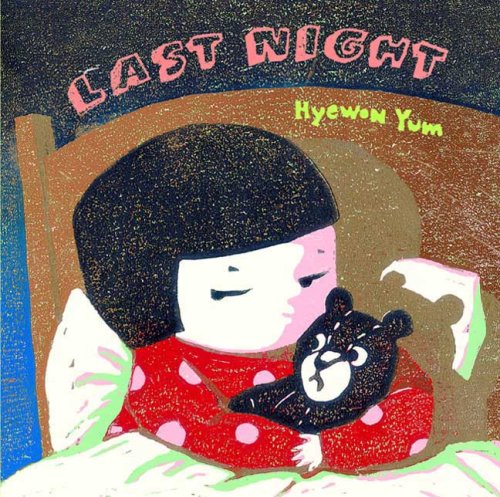
*Starred Review* Small in design and wordless in execution, this story of a young Asian girl, unhappy with her dinner, will strike a chord with many children. Impressively combining her painting and printmaking skills, Yum first offers an image of the girl obviously miserable about what’s on her plate. Mother’s angry shadow is enough to make readers understand why the girl must go to her room, where a stuffed bear offers comfort. But as the girl sleeps, something magical happens: the bear becomes real and offers his paw for a journey into the night. A mysterious and intriguing two-page spread shows the girl’s house, ordinary and everyday, sitting next to a deep forest in blues and blacks lit by a golden moon. The compact book becomes momentarily vertical as the animals of the woods are introduced and playtime ensues, but those looking very, very carefully will see the girl subtly change mood. Perhaps being in a forest with boisterous foxes and lions is not so much fun after all, and when the bear falls asleep, the girl stares pensively at the ground. Then it is morning, and the bear is once again inanimate—and Mother welcomes the girl home. With so much depth and emotion, the art makes words superfluous. Their absence gives kids room to think. Preschool-Grade 1. --Ilene Cooper

Review

“This wordless story is a very clever re-visitation of the landscape of Where the Wild Things Are.” —The Chicago Tribune

“Yum has made this book distinct with her art, which manages to be charming and eerie at the same time.” —The Oklahoman

“With so much depth and emotion, the art makes words superfluous. Their absence gives kids room to think.”—Starred, Booklist

“This is a great book for children not quite able to read, but eager to pick up a book.” —Sacramento Book Review

“In stunning linoleum block prints, debut artist Yum imagines a little girl who dreams of a night in the forest with her teddy bear . . . Some picture books are written for children; this one gives a sense of what it’s like to be one.” —Starred, Publishers Weekly

“Many adults will view this book as a useful tool to encourage children to explore and cope effectively with feelings of anger as they compose their own explanations for the series of events so vividly represented in this eloquent book.” —School Library Journal

“Linocut illustrations, done in a muted palette and printed with a grainy texture, have a raw quality; each image captures a narrative beat.” —Kirkus Reviews

“The technique used, employing several blocks of different color combinations for each illustration, requires much planning and time-consuming execution, yet the result looks spontaneous and intimate.” —The Horn Book


Product Description

A little girl doesn’t like her dinner and is sent to her room. She seeks comfort from her friend Bear and falls asleep. So begins a fantastic dream voyage deep into the forest, where the girl and her friend dance and play all night. And in the morning, mother and child make up.

With brilliant linocut illustrations and not a single word to break the spell, this picture book marks an impressive American debut for Hyewon Yum.

Book Description

A little girl doesn’t like her dinner and is sent to her room. She seeks comfort from her friend Bear and falls asleep. So begins a fantastic dream voyage deep into the forest, where the girl and her friend dance and play all night. And in the morning, mother and child make up.

With brilliant linocut illustrations and not a single word to break the spell, this picture book marks an impressive American debut for Hyewon Yum.

About the Author

HYEWON YUM was born in South Korea and studied painting and printmaking at Seoul National University. She received her master of fine arts at the School of Visual Arts in New York City, and presently lives in Brooklyn, New York.

A Life in the Wild

Down Sand Mountain

Editorial Reviews

From Booklist

*Starred Review* The author of Gorilla Doctors: Saving Endangered Great Apes (2005) offers another excellent introduction to animal conservation in this biography of pioneering environmentalist Schaller. Organized chronologically, the chapters begin with Schaller’s childhood flight from Germany to the U.S. in 1947, when the young animal lover, able to take only a few possessions to America, chose a treasured collection of bird eggs. The majority of the book, however, focuses on Schaller’s adult career as a researcher who transformed field biology with his studies of gorillas, tigers, lions, and other wild creatures around the globe. In clear, detailed prose, Turner shows how Schaller rejected the nineteenth-century approach to studying exotic animals (“find it, kill it, examine the corpse”) in favor of low-impact methods, proving that “a supposedly dangerous animal could be observed in the wild with minimal risk.” Turner’s vivid, moment-by-moment descriptions of animal encounters will captivate readers, as will Schaller’s color photos and reproduced field notes, which illustrate the chapters along with maps indicating the locations of his studies. Young environmentalists will welcome the appended material, which includes a “Getting Involved” section. Relying heavily on Schaller’s own writings as well as interviews with Schaller and his wife, Turner’s stirring portrait spotlights a scientist’s invaluable contributions to animal study; the gritty, thrilling particulars of fieldwork; and the urgent necessity to protect wild creatures and their habitats. Grades 5-8. --Gillian Engberg

Review

“Although Turner covers a lot of ground, including some fascinating behavioral science, she also tells the stories of individual animals.” —Natural History Magazine

“Turner's stirring portrait spotlights a scientist's invaluable contributions to animal study; the gritty, thrilling particulars of fieldwork; and the urgent necessity to protect wild creatures and their habitats.” —Starred, Booklist

“Taking young readers to the ends of the earth . . . Pamela S. Turner offers an absorbing introduction to a scientist in the field—and in the savannah, the forest, the mountains and any other remote animal habitat you can think of.” —Washington Post Book World

“A Life in the Wild can obviously be used as an enrichment book, but it is far more than that . . .this is a wonderful book for kids to read to see that science is definitely not all done by Einstein-like caricatures in some messy lab.” —National Science Teachers Association (NSTA.org)

“Pamela S. Turner’s A Life in the Wild is the only biography written for children (ages 10 and up) about this man on a mission.”—Wildlife Conservation Magazine

“Turner neatly blends lively accounts of Schaller’s life in various wildernesses with wife and kids with more serious discussion of his work and seminal discoveries about animal behavior.”—Bulletin of the Center for Children’s Books

“The writing is both clear and lively.”—School Library Journal

“This introduction to an environmental hero, the first for young readers, is timely and inspiring, and the endmatter appropriately includes suggestions for reader involvement in conservation activities.” — Starred, Kirkus Reviews

“Animal lovers and conservation-minded students will enjoy this excellent introduction to Schaller and his ideas.” —VOYA

Product Description

For more than fifty years, explorer-naturalist George Schaller has been on a mission: to save the world’s great wild beasts and their environments. In this compelling biography, illustrated with Schaller’s own striking photographs, Pamela S. Turner examines the amazing life and groundbreaking work of the man International Wildlife calls “the world’s foremost field biologist.” Schaller’s landmark research revolutionalized field biology, demonstrating that it is possible to study dangerous animals in their own habitats: mountain gorillas in Central Africa, predatory tigers in India, mysterious snow leopards in the Himalayas, and many others. His insights about species and environment led him to successfully advocate for the protection of over 190,000 square miles of wilderness around the world – an area the size of Spain.

Packed with grand adventure, intriguing science, dramatic photographs, and Schaller’s own breathtaking descriptions of the natural world and the animals who live in it, this full-color biography brilliantly captures the spirit and passion of George Schaller’s unusual – and inspiring – life in the wild.

Book Description

For more than fifty years, explorer-naturalist George Schaller has been on a mission: to save the world’s great wild beasts and their environments. In this compelling biography, illustrated with Schaller’s own striking photographs, Pamela S. Turner examines the amazing life and groundbreaking work of the man International Wildlife calls “the world’s foremost field biologist.” Schaller’s landmark research revolutionalized field biology, demonstrating that it is possible to study dangerous animals in their own habitats: mountain gorillas in Central Africa, predatory tigers in India, mysterious snow leopards in the Himalayas, and many others. His insights about species and environment led him to successfully advocate for the protection of over 190,000 square miles of wilderness around the world – an area the size of Spain.

Packed with grand adventure, intriguing science, dramatic photographs, and Schaller’s own breathtaking descriptions of the natural world and the animals who live in it, this full-color biography brilliantly captures the spirit and passion of George Schaller’s unusual – and inspiring – life in the wild.

About the Author

PAMELA S. TURNER is the author of several award-winning books for children, including Gorilla Doctors: Saving Endangered Great Apes, an ALA Notable Book and a Kirkus Reviews Best Book of the Year. She lives in Oakland, California.